Requirements Management.
At the pace of your program.
Flow keeps requirements, systems, tests, and verification aligned continuously, so teams can make decisions with complete context, work in parallel, and understand the impact of any change in seconds.

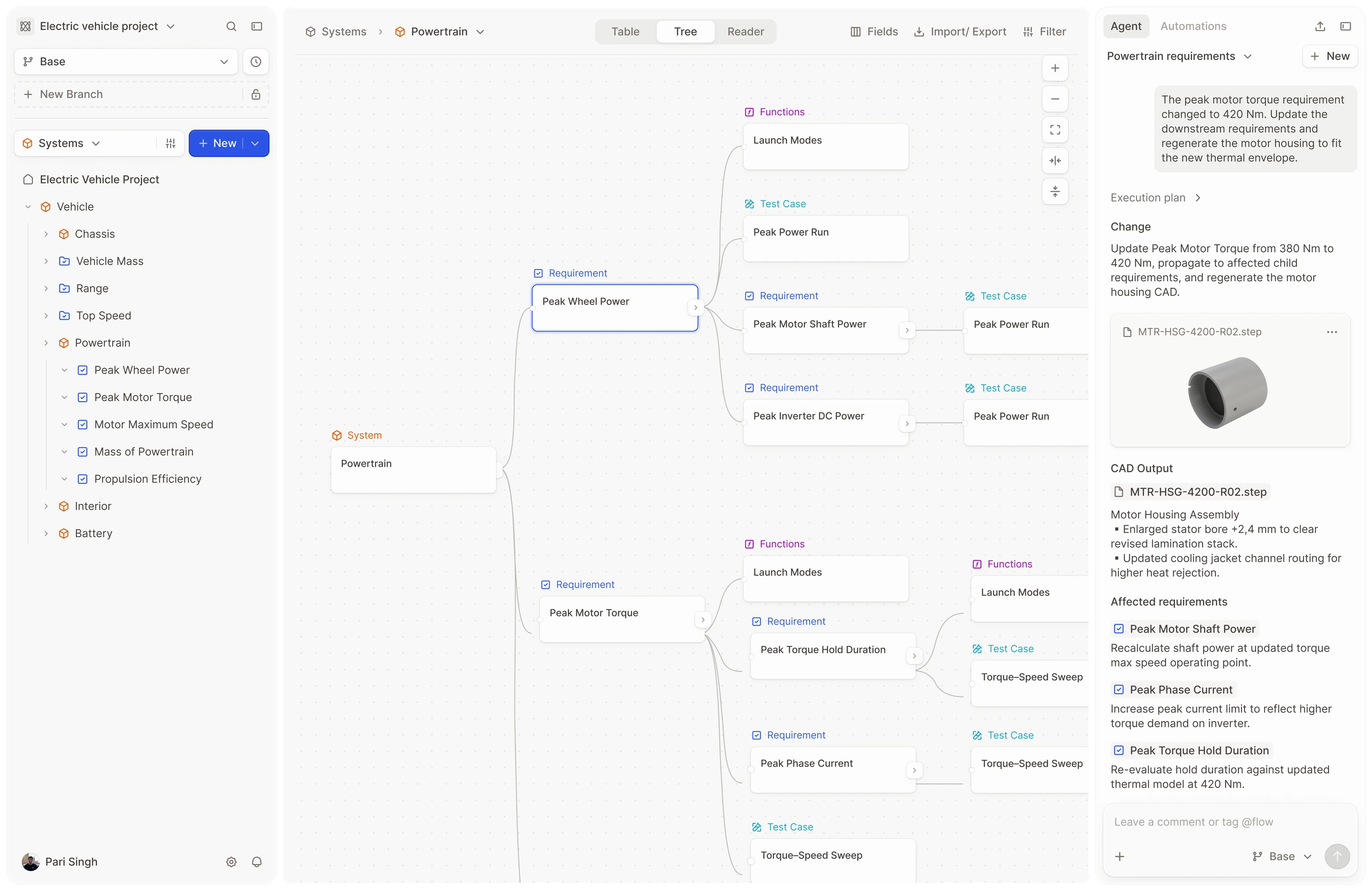
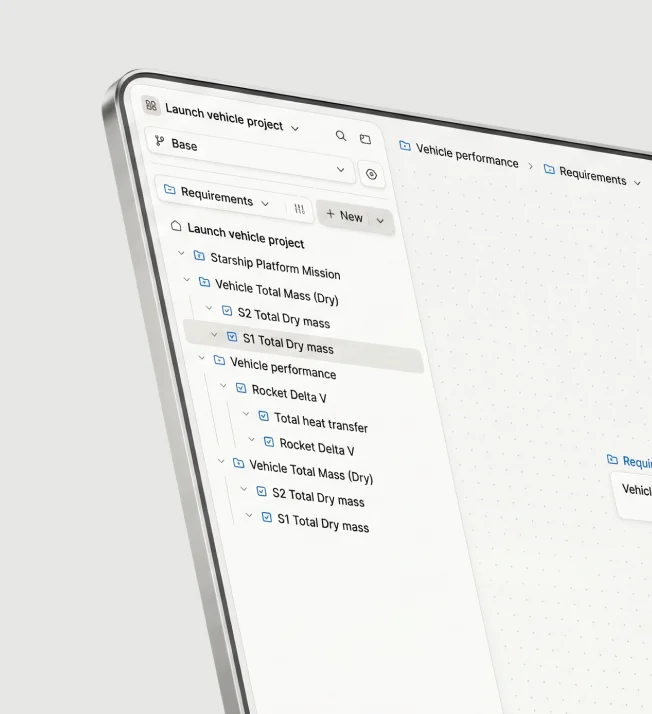
Every requirement in Flow lives in a live model called the Systems Graph. It stays linked to the systems it governs, the tests that verify it, the interfaces it constrains, and the standards it must satisfy. When something changes, those connections keep requirements accurate and prevent drift across the program.
Faster Design Reviews.
PDRs, CDRs, and release reviews focus on tradeoffs and risk instead of chasing traceability gaps.
Always Certification Ready.
Certification evidence is generated as the program evolves instead of being assembled manually before an audit.
Fewer Integration Surprises.
Ambiguity, conflicting assumptions, and missing verification paths are caught and prevented before they become integration failures.
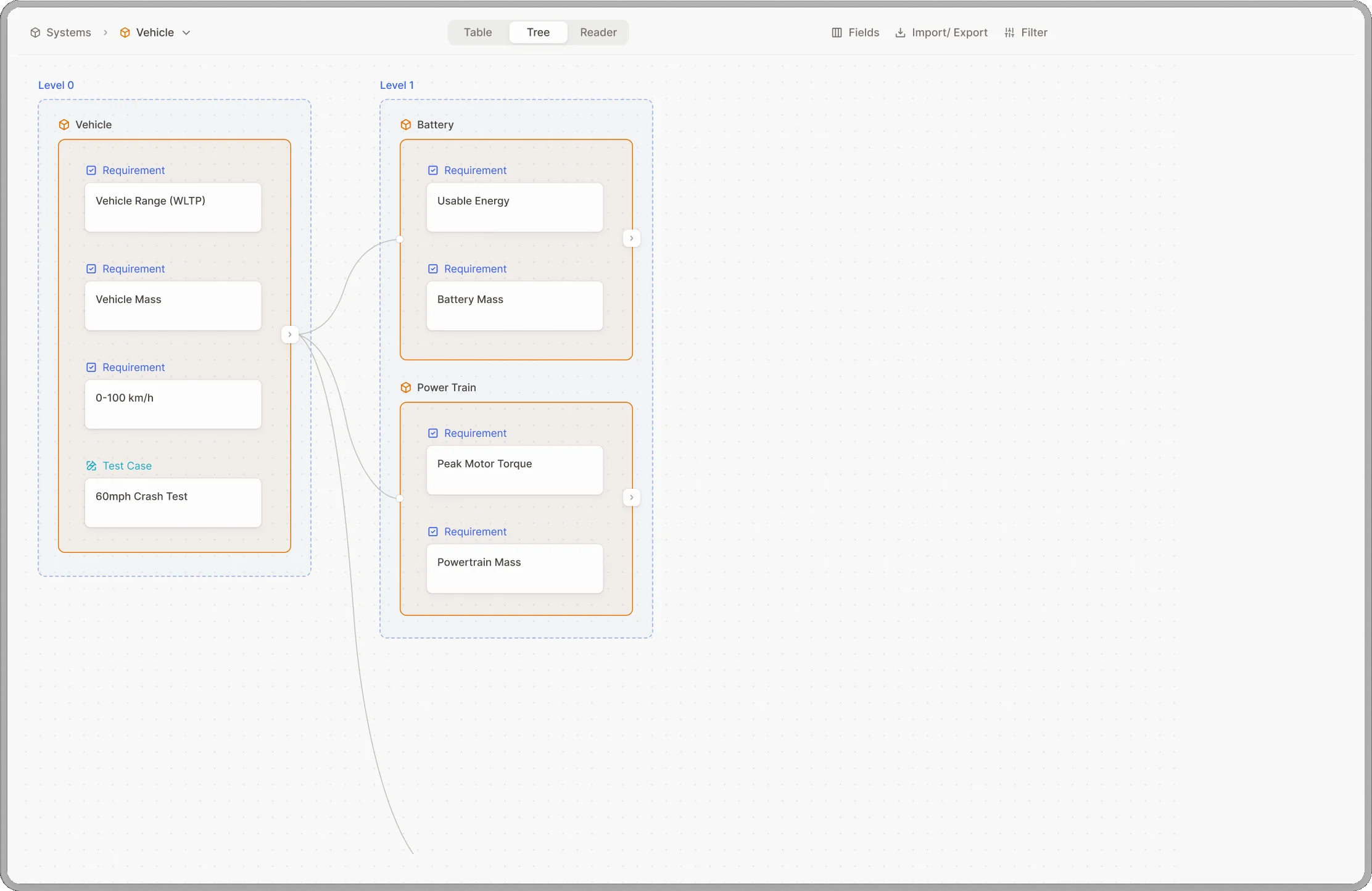
One set of requirements.
Shared by every discipline.

Flaws caught early.
While they're cheap to fix.

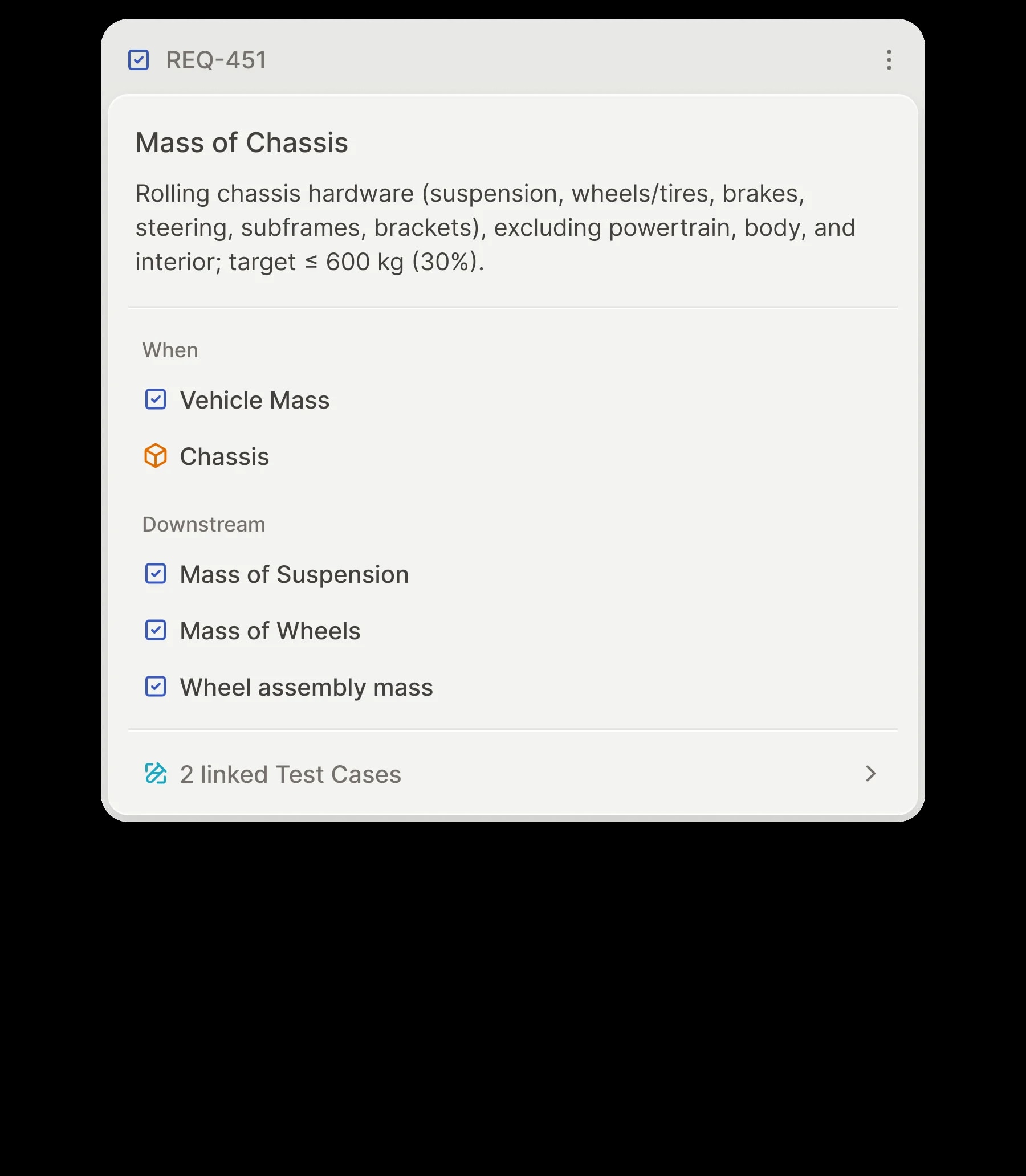
Flow meets engineers.
Where they already work.

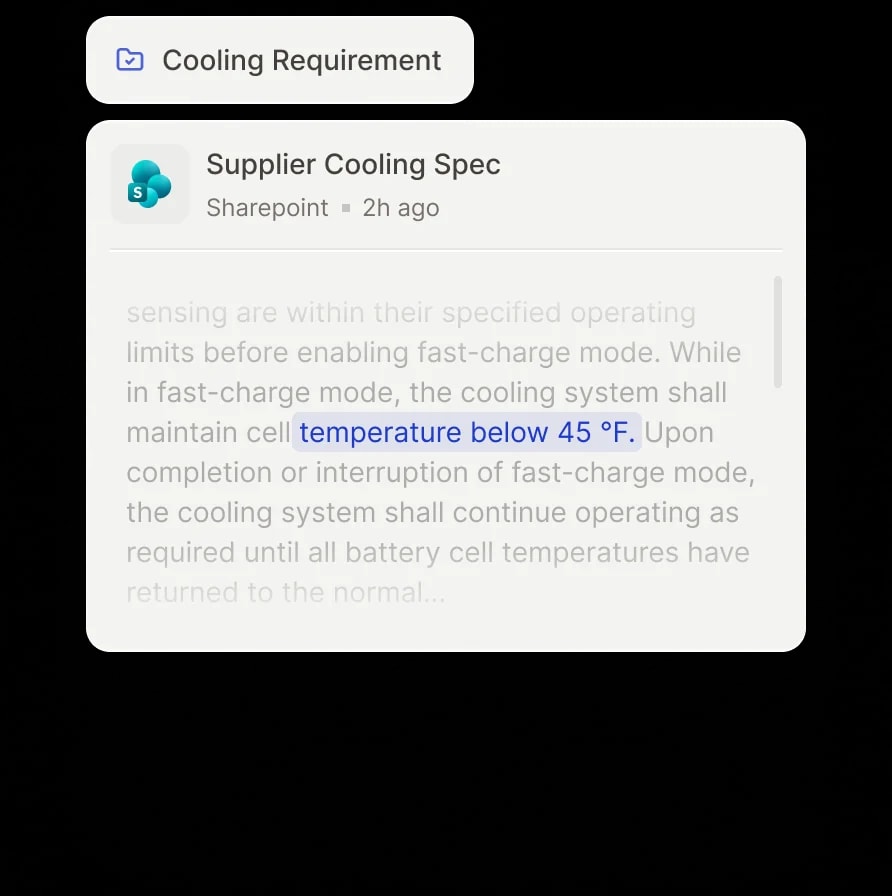
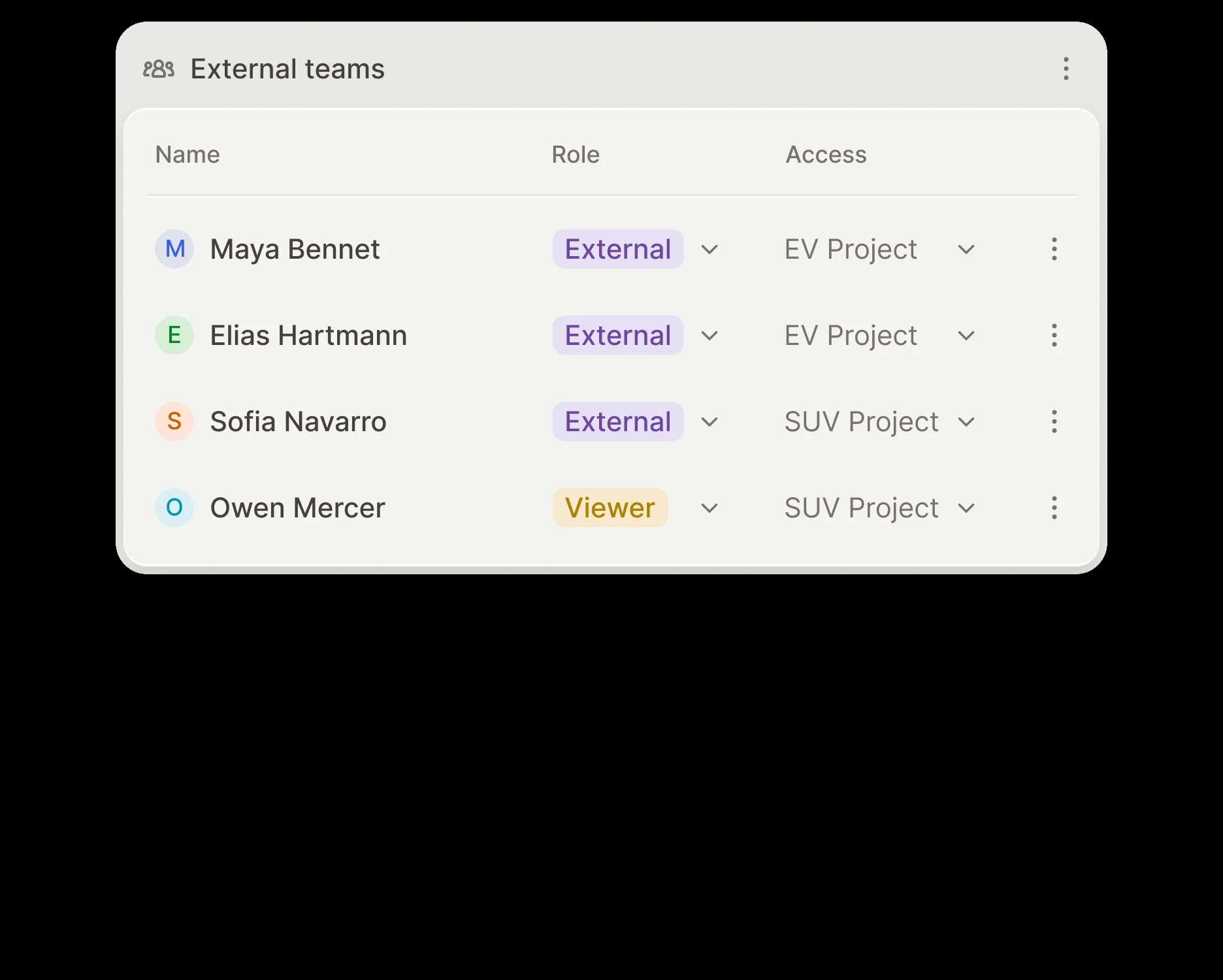
External teams, live data.
Scoped to what you share.

And so much more.
Configurable data model.
Define the entity types your program needs: requirements, systems, interfaces, hazards, design values, flow items, test cases. Each with the custom typed fields your process requires. Nothing is locked to a fixed schema.
AI-assisted authoring.
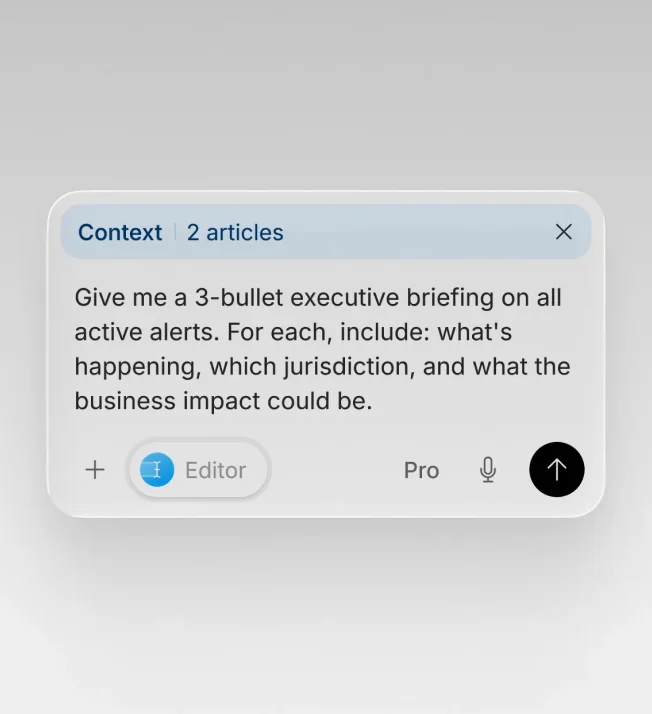
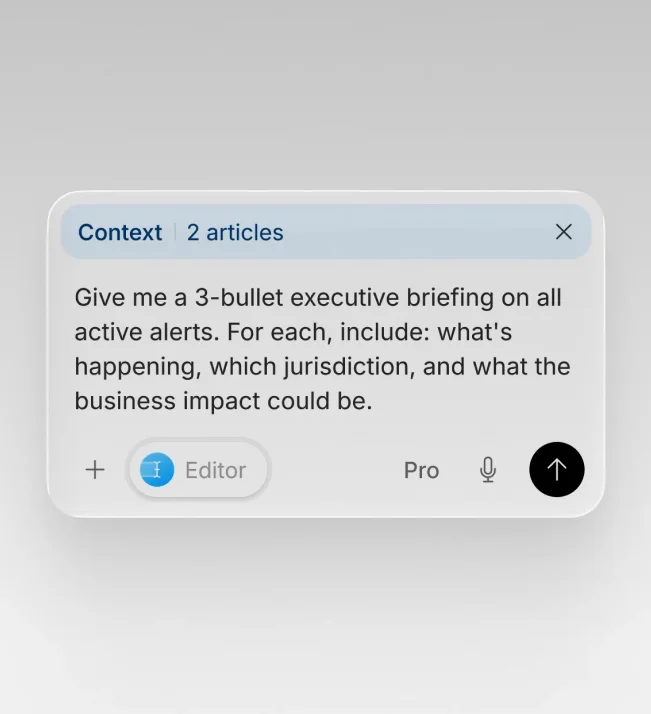
Flow's AI drafts requirements from natural language descriptions, regulatory source documents, supplier specs, CAD inputs, and more. It applies your program's naming conventions, quality criteria, and standard references, without being re-prompted every time.
Immutable change history.
Every change to every requirement is recorded: what changed, who changed it, when, and on which branch. The audit trail is a structural property of Flow, not a bolt-on log.
Tagging and mentions.
Mention teammates directly in a requirement to loop them in or ask a question. No need to jump to email, Slack, or Jira.
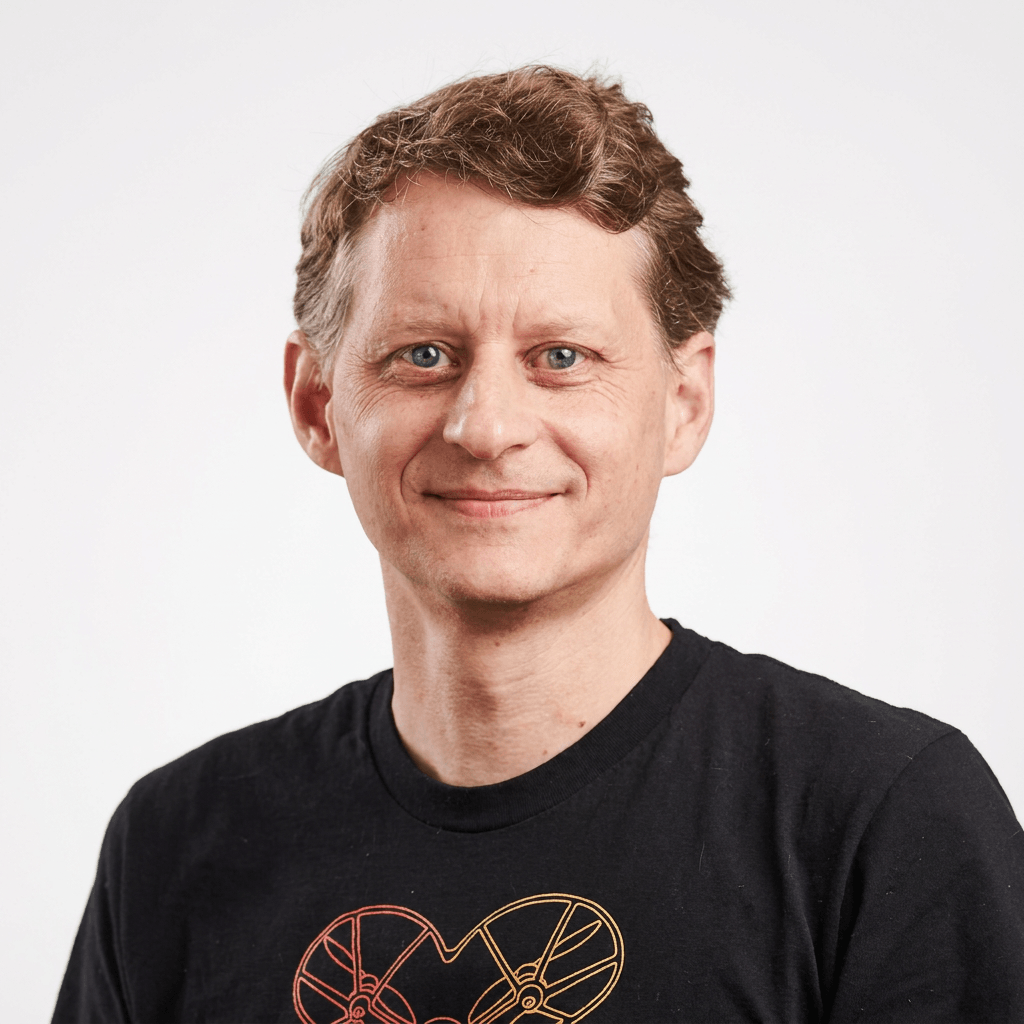
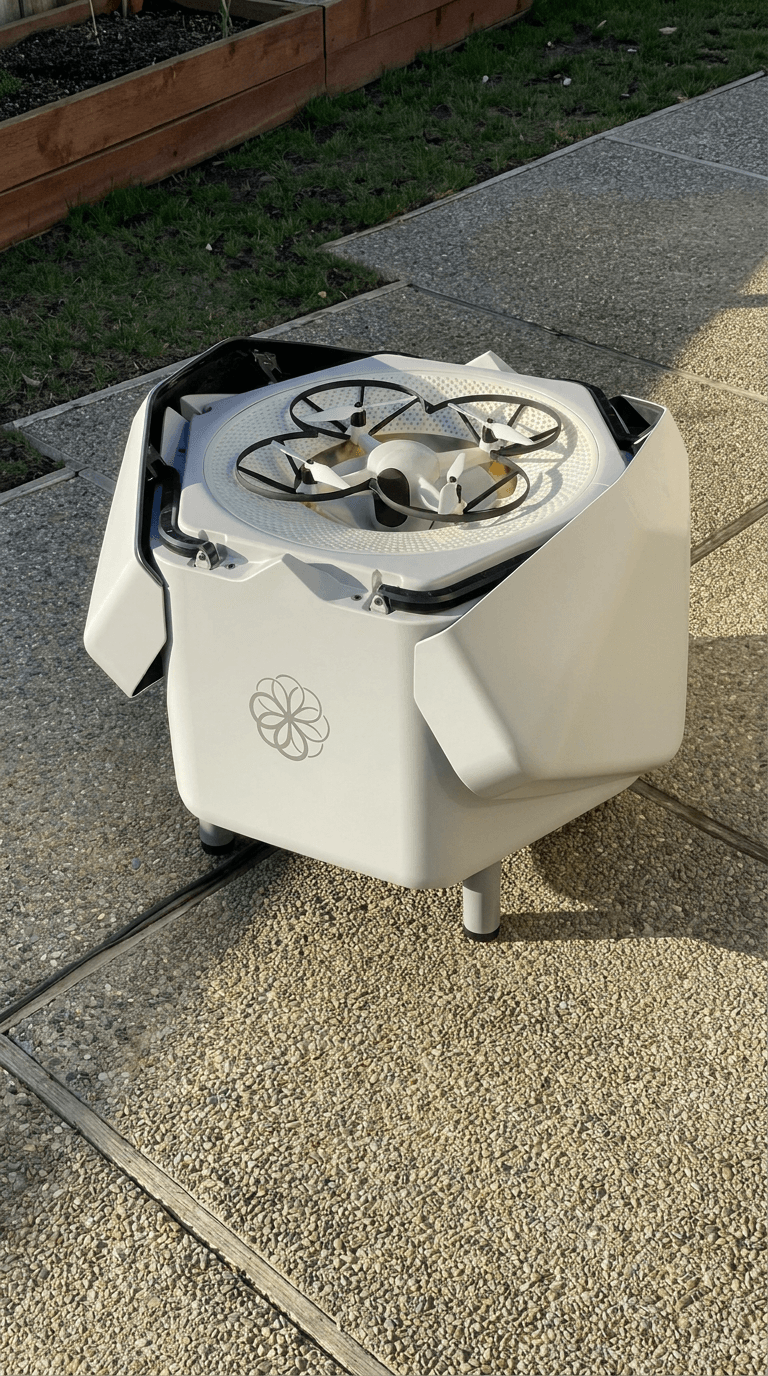
We're building a complex autonomous system, and things change fast. We didn't want a tool that slows us down. Flow was built for the kind of iterative engineering we actually do.
Chris Eheim
Founder & CEO

Requirements are just the start.
Architecture
Map components, interfaces, and dependencies as designs evolve.
Traceability
Every requirement, design, and test, connected by default.
Continuous V&V
Verify against live requirements with every commit.
Accelerate your cycle times.
Maintain your engineering rigor.
Trusted by 10,000s of engineers